

How much should a small biz in Melbourne budget for Facebook ads each day? Well, the answer is: it’s down to some pretty crucial numbers, like the conversion rate, how much you’re paying per lead, what your ad campaigns is trying to achieve, and whether buying a customer is worth it in the long run. Too many founders assume throwing more money at Facebook ads will automatically lead to more profit, but the truth is that winning revenue growth comes from sorting out your ad campaigns with a clear plan, pinpointing the right audience, and having a sales funnel that actually converts.
At Karma Media, our Strategy Team likes to think of paid traffic as a system for getting more customers, rather than just another way to play around with ads. When you treat Meta advertising as a proper business strategy, you see it as a way to drive predictable customer acquisition. That’s why more and more companies are turning to a Meta ads agency in Melbourne when they want to get beyond the guesswork and zero in on a real real ROI.
Contents
- 1 Setting up a Campaign That Actually Sells
- 2 The Right Structure for Real Growth
- 3 Conversion Infrastructure That Boosts Lead Efficiency
- 4 Keeping Ad Performance Fresh
- 5 When The Data Speaks
- 6 Financial Framework For Smarter Advertising
- 7 Paid Ads In Your Growth Strategy
- 8 Making Your Ads Hit Their Mark
- 9 Where The Real Money’s Made
- 10 Operational Costs Behind Ad Budgets
- 11 Secure Marketing Systems
- 12 Strategic Advertising Investment
- 13 FAQ
- 13.1 What Sort Of Daily Investment Produces Reliable Results?
- 13.2 Why Should I Care More About Conversion Efficiency Than How Much I Spend?
- 13.3 How Does the Facebook Pixel Improve Advertising Results?
- 13.4 What Usually Causes Advertising Performance To Start Declining?
- 13.5 Why Should I Combine Meta Advertising With Search Platforms?
Setting up a Campaign That Actually Sells

The thing is, even if you’re throwing a lot of cash at Meta Ads Manager, it’s pointless if you’re not getting the basics right. Meta’s system is a live auction – everyone’s competing for ad space based on how well they’re doing in terms of ad relevance, quality, and actually getting results.
Without a well-thought-out plan, even a large ad spend won’t drive consistent sales or leads.
The Right Structure for Real Growth

A well-run system usually breaks down into 3 clear layers :
- • Prospecting campaigns that target people you don’t know who are part of your ‘Core Audience‘
- • Retargeting campaigns that go after people you’ve already interacted with (via Custom Audiences)
- • Testing campaigns that try to work out which ad creative really works and can scale
| Campaign Layer | Primary Function | Budget Allocation | Role In Growth |
| Prospecting | Acquire new customers | 60–70% | Demand generation |
| Retargeting | Convert warm visitors | 20–30% | Efficiency optimisation |
| Creative Testing | Discover scalable ads | 10–15% | Growth acceleration |
Meta’s delivery system works best when it consistently captures the conversion events it needs to achieve your campaign goals. Most campaigns finally get on track when they’re racking up around 30-50 conversions per week.
Example calculation
Average Cost Per Lead:$35 The number of conversions we’re aiming for each week: 40
Weekly spend
So that’s $35 x 40 = $1,400
Daily budget
And then we split that by 7 (days of the week) to get a daily budget of roughly $200.
Now, for many Melbourne service businesses, once you get the right structure in place, the budgets we’re talking about daily usually fall between $80 and $250.
But when people start working with Karma Media – one of Melbourne’s well-established Meta ads agencies – they often discover that the real reason their campaigns just aren’t cutting it is because of a lack of structure (not because they don’t have enough cash to throw at the problem).
Conversion Infrastructure That Boosts Lead Efficiency

Traffic alone doesn’t bring home the bacon. The funnel that captures that traffic determines the final cost of acquisition.
When we get the messaging and targeting just right and make sure the page experience is up to scratch, that’s when you start seeing a real jump in conversion rates.
Core Funnel Components
To get a profitable acquisition funnel up and running, you’re going to need:
- • Ad creative that really performs
- • A dedicated landing page designed with one thing in mind: converting
- • To be tracking events properly using the Facebook Pixel
- • Retargeting campaigns to been back to visit
- • A clear campaign objective that’s aligned with your growth goals
When all these bits and bobs work together, your Cost Per Action goes down, and your acquisition efficiency goes up.
Performance Comparison Example
We’ve got two Melbourne businesses that are both spending the same amount of cash each day.
Business A
Conversion rate: 1.4% Cost per click:$2.20 Cost Per Lead:$125
Business B
Conversion rate: 6.1% Cost per click:$2.20 Cost Per Lead:$28
The difference comes down to the funnel design, not how much you’re spending.
And that’s one of the reasons businesses so often reach out to a Meta ads agency in Melbourne (like Karma Media) when their campaign isn’t scaling as they’d hoped.
Keeping Ad Performance Fresh
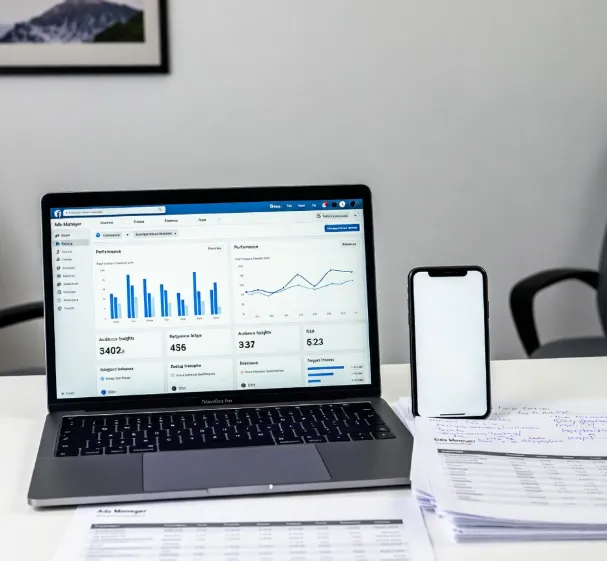
Meta’s ad auction is always looking for the next big thing in ad creative – and so should you.
When you stick with the same old visuals for too long, ad fatigue sets in. Your audience starts to tune you out, your cost per click shoots up, and ad relevance starts to look a little tired.
Testing Your Way to Success
If you want to keep your campaigns performing, you need to be testing regularly. Here’s how it usually goes:
Launch 3 or 4 new ads every week – keep it fresh to keep it interesting!
Try different messages with your target audience – see what sticks
Keep a close eye on those click-through and conversion rates – they’re your lifeline
And don’t be afraid to pull the plug on ads that just aren’t working
You’ve got a range of creative formats to play with:
Video demos that show your product in action
Static graphics that are either professionally designed or hacked together (no judgement!)
Story-driven ads that’ll capture your audience’s heart
And all sorts of other formats that’ll keep things fresh
The best ads are promoted to larger campaigns, where the budget is higher, and the expectations are higher. But without regular testing, even the biggest budget won’t be enough to keep your ad performance from tanking.
When The Data Speaks
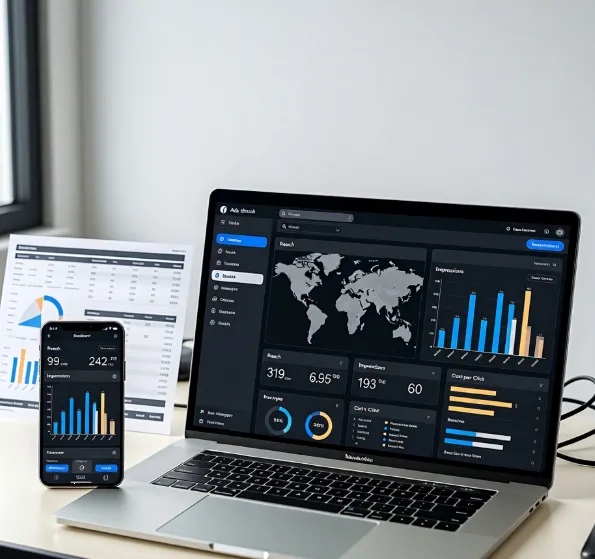
When it comes down to it, making smart ad decisions means knowing your numbers.
But tracking errors are a real problem – misconfigured analytics, dodgy pixel installation or just plain differences between platforms can all cause trouble.
Common issues include:
Missing conversion events that leave you wondering what’s going on
The Facebook Pixel setup is just not working right
Your Meta Ads Manager and Google Analytics reports just do not agree
And those broken scripts that produce data that’s just not worth anything
Getting Your Data Straight
Before you even think about adjusting your ad spend, you need to double-check a few things:
Is your pixel firing properly on the landing page?
Are your conversion events showing up inside Meta Ads Manager?
Are your analytics platforms reporting the same results?
And are those retargeting audiences building up correctly?
When your data is solid, your advertising system starts to really respond to what your customers are doing, not just what you think they’re doing.
Financial Framework For Smarter Advertising
To know your daily budget, stop guessing and let your business’s numbers do the talking.
Every business has a maximum amount they can spend on acquiring a customer – and it’s not a wild guess. It’s based on how much they make and what it costs them to make it.
A Contribution Margin Example
Let’s say you sell something for $120; it costs $35 to make, and there are $5 in fees and $10 to get it to the customer. The maths is pretty simple:
$120 – $50 = $70
So, that $70 is what you’ve got to spend on acquiring a customer. In theory. In reality, you’re aiming for around $40-$50.
A Budget Planning Example
Imagine you’re trying to get four customers in per day, and you’ve worked out that it costs $45 each to get them in. Easy maths:
4 x $45 = $180 per day on advertising.
And that’s how you make sure you’re investing in your ads in a way that makes sense – not just throwing money at the marketing wall in the hopes something sticks.
The businesses that get this right – treating paid media like a financial system, not a wing-it-and-see experiment – they’re the ones that scale up fast.
Paid Ads In Your Growth Strategy
Meta ads are only as good as the rest of your online ecosystem. Each channel of yours captures the customer at a different stage.
| Channel | Role | Customer Intent |
| Meta Ads | Discovery | Brand awareness |
| Google Ads | Search demand | High purchase intent |
| Google Shopping | Product discovery | Transactional intent |
| Email marketing | Retention | Repeat purchases |
Supporting strategies like Content Marketing, social media presence & email marketing all help to add real oomph to paid traffic.
Companies like Karma Media are often masters at combining multiple channels into a single marketing approach, which keeps their acquisition costs rock solid.
Making Your Ads Hit Their Mark
Meta has a few targeting frameworks at its disposal that let you reach the right people.
But what makes a campaign really effective? You guessed it – when you combine multiple audience types.
Your Audience Strategy
A typical Prospecting campaign includes:
- • core audiences – built from demographics and interests
- • lookalike audiences modelled on your existing customers
And then there are Retargeting campaigns focusing on:
- • people who’ve visited your site
- • video viewers
- • people who’ve shown interest in a lead
This multi-layered approach gives your ads a lot more oomph and ups the chances of converting.
By taking the time to get really precise with your targeting, you can slash that Cost Per Action and leave the one-size-fits-all campaigns behind.
Where The Real Money’s Made
Any business that relies on just one-shot sales is already limiting its growth potential.
Growth that lasts is all about increasing customer lifetime value.
What’s Your Lifetime Value Look Like?
Initial sale: $85; acquisition cost: $60. It looks like it’s gonna be a tough sell at first.
But then something happens: That return customer shows up and buys again – $110 They come back a third time – $95
Total value of that customer – $290.
Now you’re in a position to crank up that ad spend without worrying the business will go straight into the red.
Hacking The Back End
Ways to up that customer value:
- • email marketing sequences that get people coming back
- • offers to upgrade
- • loyalty rewards and perks
- • membership programs
By adding these layers, you can increase ad spend without eating too far into your margins.
Operational Costs Behind Ad Budgets
Advertising budgets are just one part of the bigger picture when it comes to running a business.
You’ll need to factor in a bunch of typical start-up costs, such as:
- • Registering your business name
- • Paying for the lawyers to get everything compliant
- • Developing your business plan
- • Sorting out your website design and getting your tech set up
- • Hiring the staff you’ll need to get off the ground
Some operational expenses, such as vehicle registration or setting up logistics, can also eat into your marketing budget.
Having a clear grip on your finances means you can allocate your ad spend without worrying about undermining stability.
Secure Marketing Systems
If you’re shelling out big bucks for digital acquisition, then you need to make sure your website is as secure as a fortress.
Anything can go wrong with landing pages and tracking systems if you get hit by:
- • Online attacks looking to disrupt your ad funnels
- • Data is getting corrupted in your analytics scripts
- • Security services that just don’t know what they’re doing
A reliable host and a proper security solution can go a long way in keeping your campaigns running smoothly.
Protecting the accuracy of your analytics is crucial if you’re seeing massive traffic volumes coming in from your campaigns.
Strategic Advertising Investment
Your daily ad budget should be based on what you want to achieve for your business, not just making it up as you go.
Karma Media’s Strategy Team goes over accounts all the time for businesses that throw more money at ad spend but ignore underlying problems like poor targeting, dodgy funnels, or getting the data tracking right.
For most small Melbourne businesses, a properly set up Meta campaign usually starts at around $80 to $250 per day.
Working with a partner like Karma Media, which knows its stuff, turns paid traffic from a shot in the dark into a structured growth engine.
When your campaign structure, audience targeting, and conversion infrastructure are all working in harmony, Meta advertising can be an incredibly powerful way to drive new business.
FAQ
What Sort Of Daily Investment Produces Reliable Results?
Typically, small businesses will start testing campaigns between $80 and $150 per day and see what sticks. If they’re getting consistent leads or sales, they might start to scale up into the $150 to $250 daily range once they’ve got their optimisation sorted.
Why Should I Care More About Conversion Efficiency Than How Much I Spend?
When your conversions are happening at a higher rate, your Cost Per Action and Cost Per Lead go down, which means you can scale ad spend without blowing your budget.
How Does the Facebook Pixel Improve Advertising Results?
The Facebook Pixel tracks what’s happening on the landing page so Meta can optimise ad delivery and get your ads in front of people who actually care.
What Usually Causes Advertising Performance To Start Declining?
Most of the time, it’s ad fatigue – people get sick of seeing the same ads over and over, and suddenly they just aren’t interested anymore. Cost per click goes up, and everyone’s happy – not.
Why Should I Combine Meta Advertising With Search Platforms?
Meta gets you brand awareness and discovery, while search platforms get you high-intent traffic. When you put the two together, you get more stable results from your ad spend.